

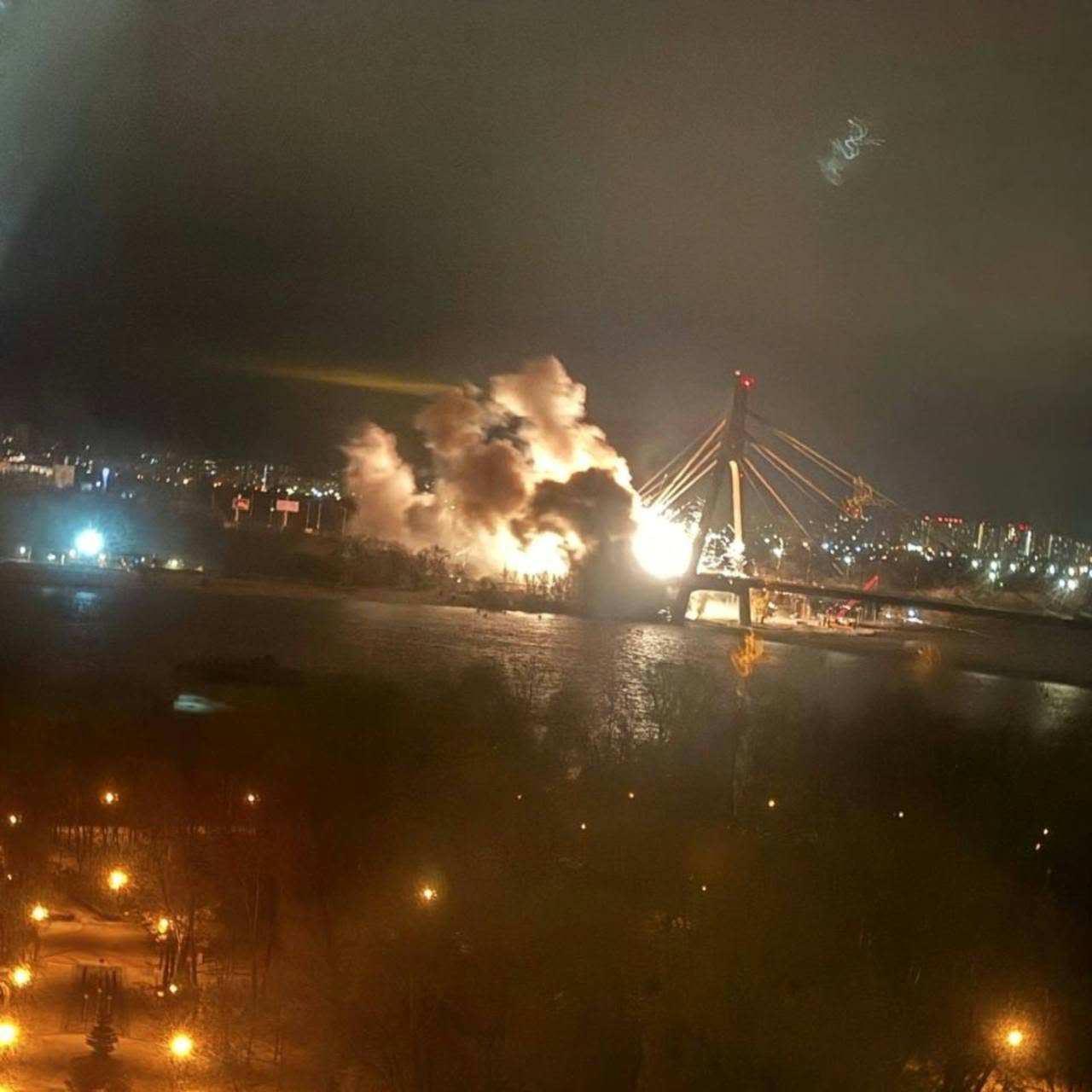
Important clarification: in Kyiv, the Pivdennyi (Southern) Bridge and the Pivnichnyi (Northern) Bridge are two different crossings. It was the Northern Bridge that was known as the Moscow Bridge until 2018. This is confirmed by the official decision of Kyiv City Council to rename it.
Russian forces attacked both bridges during the night of 16–17 November 2026. According to confirmed information from Kyiv authorities, both bridges sustained damage. The Southern Bridge had already been targeted repeatedly since early October.
Three ballistic missiles fired at Kyiv’s Northern Bridge: Russia launches another strike on one of the capital’s main transport arteries
18 November 2026 | Updated with reports from 17 November
Russian forces launched another large-scale missile attack on Kyiv, this time concentrating a significant part of the assault on bridges crossing the Dnipro River. One of the main targets was the Northern Bridge, a major transport crossing formerly known as the Moscow Bridge.
During the night of 16–17 November, Russian forces fired three ballistic missiles at the Northern Bridge. Another four missiles were launched at the Southern Bridge. Ukrainian President Volodymyr Zelenskyy confirmed the information about the seven ballistic missiles.
Both crossings sustained damage as a result of the attacks. Road traffic had to be temporarily suspended, while public transport was diverted onto alternative routes. The strikes on key transport infrastructure disrupted connections between the two banks of the Dnipro River and affected the daily lives of hundreds of thousands of Kyiv residents.
Northern Bridge: what happened during the attack
According to official reports from the Kyiv City State Administration, Russian forces carried out two waves of missile attacks on the capital late on 16 November and early on 17 November.
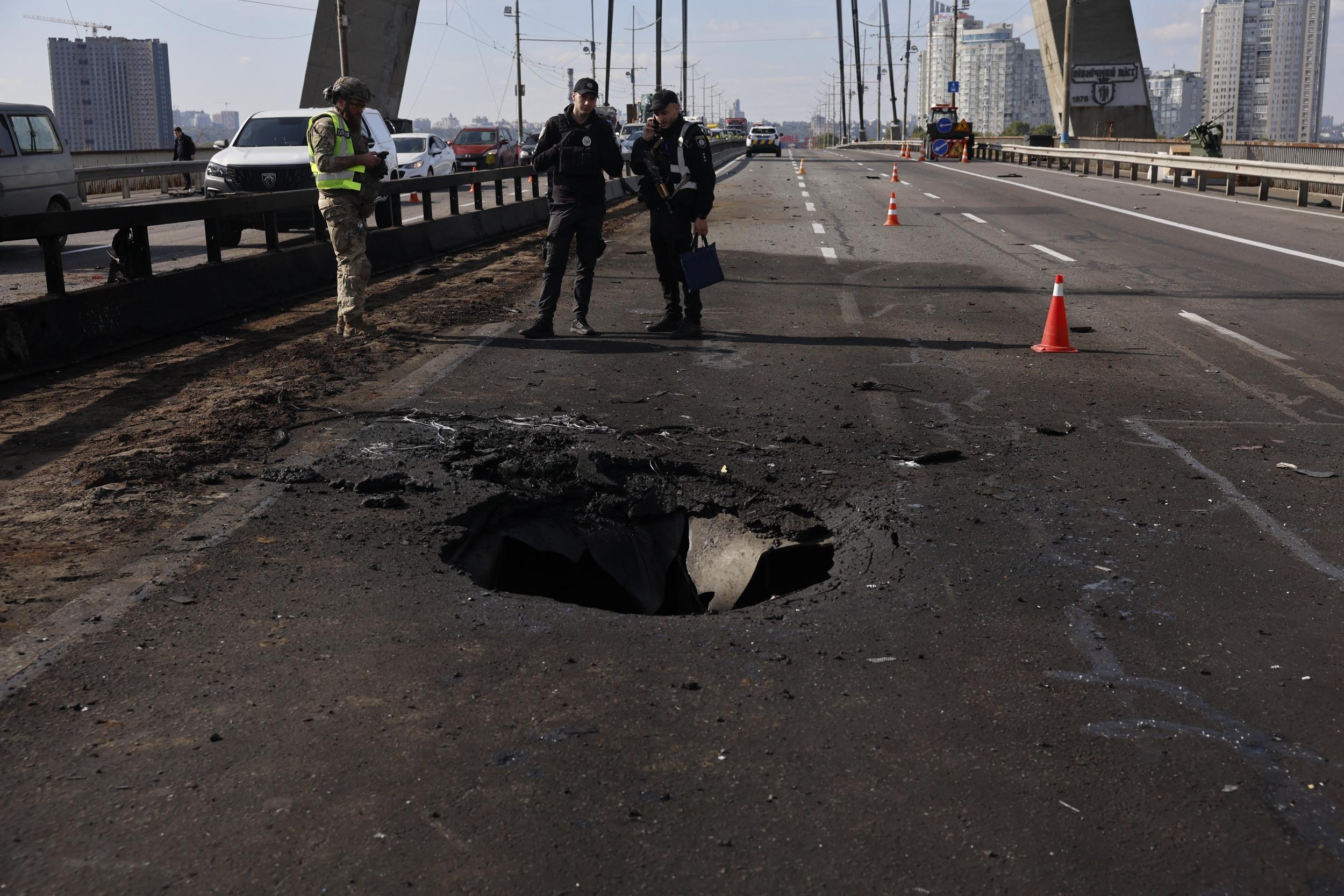
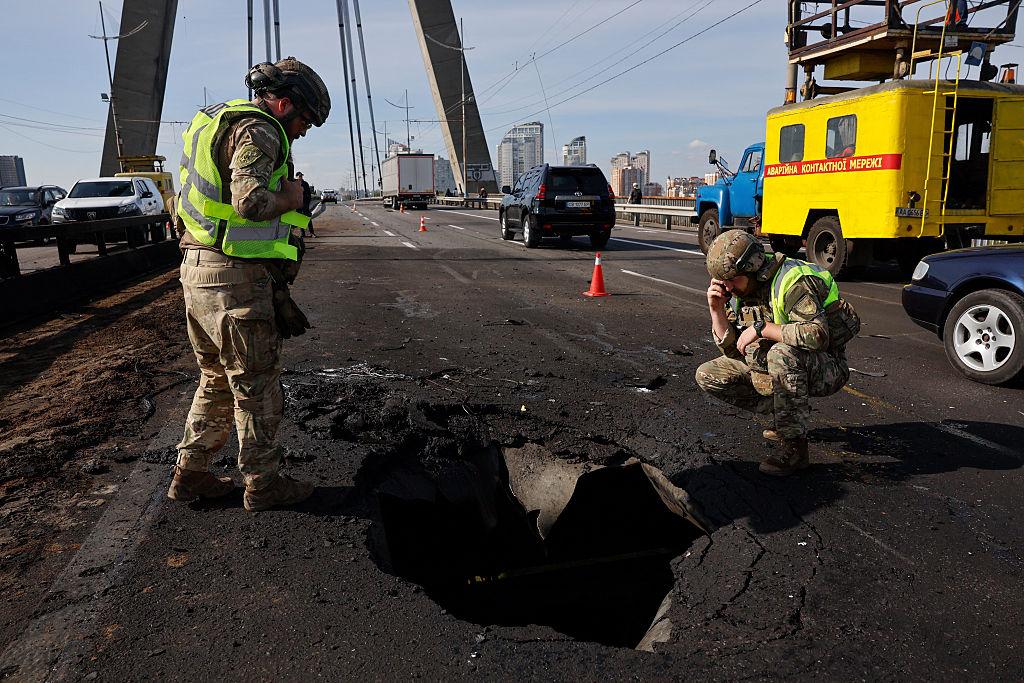
Damage to the Northern Bridge was recorded in the Desnianskyi district. Initially, the bridge was completely closed to traffic in both directions. Emergency and technical teams arrived at the scene to assess the condition of the road surface and the bridge’s structures.
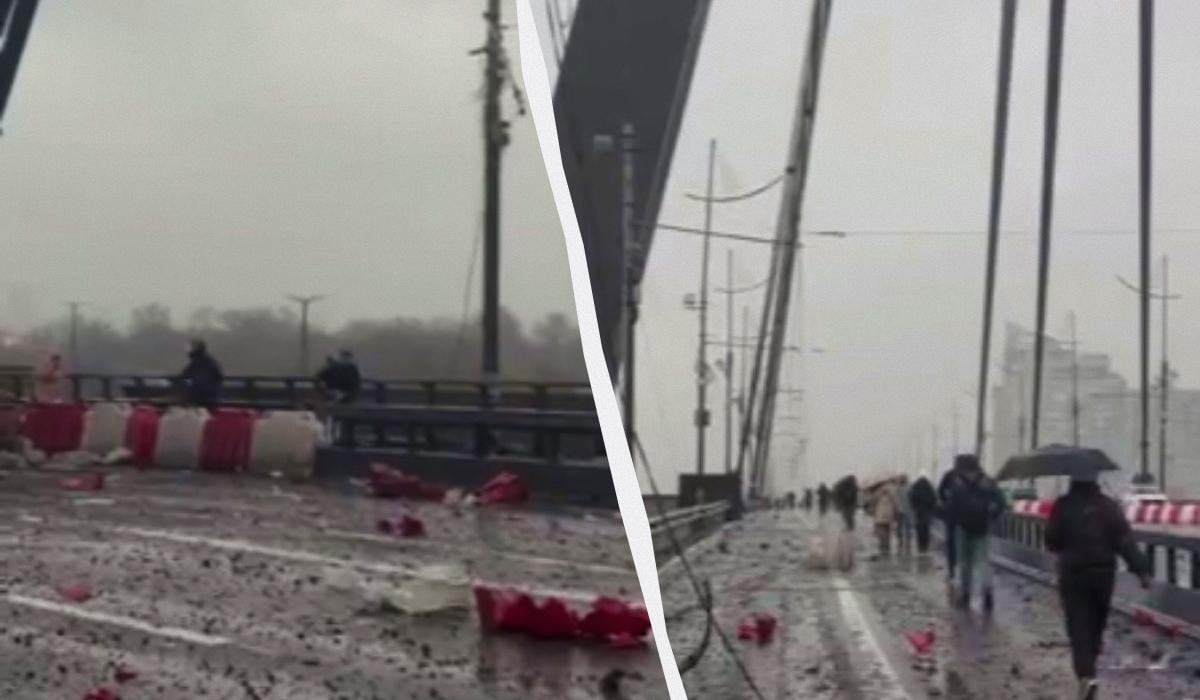
Footage published on 17 November showed people crossing the Northern Bridge on foot after vehicle traffic had been suspended. The video was filmed by journalists from The Kyiv Independent and shared, among others, by Maksym Bakhmatov, head of the Desnianskyi District Administration.
This was one of the clearest examples of the consequences of the attack: despite the damage and suspension of traffic, residents still had to find ways to reach the opposite bank of the river.
Kyiv Mayor Vitali Klitschko also published video footage from the scene. He said specialists were inspecting both targeted bridges and that any decision to reopen them to traffic would depend on the results of technical assessments.
However, it is important to distinguish confirmed damage from speculation circulating online. As of 17 November, the authorities had not announced the complete collapse of the Northern Bridge. Claims that its load-bearing suspension cables had been destroyed also remained unverified.
Why damage to the Northern Bridge became a serious problem for Kyiv
The Northern Bridge plays a particularly important role in the capital’s transport network. It connects Obolon on the right bank with the left-bank part of the city, crossing the Dnipro and Desenka rivers. Major road traffic flows and public transport routes pass across this bridge.
Before being renamed in 2018, the crossing was known as the Moscow Bridge. The decision to rename it was adopted by Kyiv City Council. Therefore, this is not the Southern Bridge, which was also targeted by missile strikes, but a separate crossing in northern Kyiv.
Of particular concern is the fact that the 17 November attack was far from the first. Since early October, the Northern Bridge has repeatedly been targeted by Russian strikes. According to the publication Khmarochos, it had already been damaged three times before the latest attack, including on 7 November. The Southern Bridge was attacked at least four times in October alone.
Repeated strikes are dangerous not only because of the immediate destruction they cause. Even when a damaged bridge can be partially reopened, specialists must inspect its structures, assess load restrictions and carry out repairs.
For Kyiv, a city divided by the Dnipro River, simultaneous restrictions on several bridges place additional pressure on the remaining transport routes. This is particularly significant for public transport, emergency services and people who commute between the two banks every day.
Damage extended beyond the road surfaces
The consequences of the missile strikes were not limited to the bridge structures themselves.
The Kyiv City Administration officially confirmed damage to major heating pipelines running across the Northern and Southern bridges. As a result, heating supply problems affected several parts of the capital. Specialists from Kyivteploenergo began switching consumers to alternative heating sources.
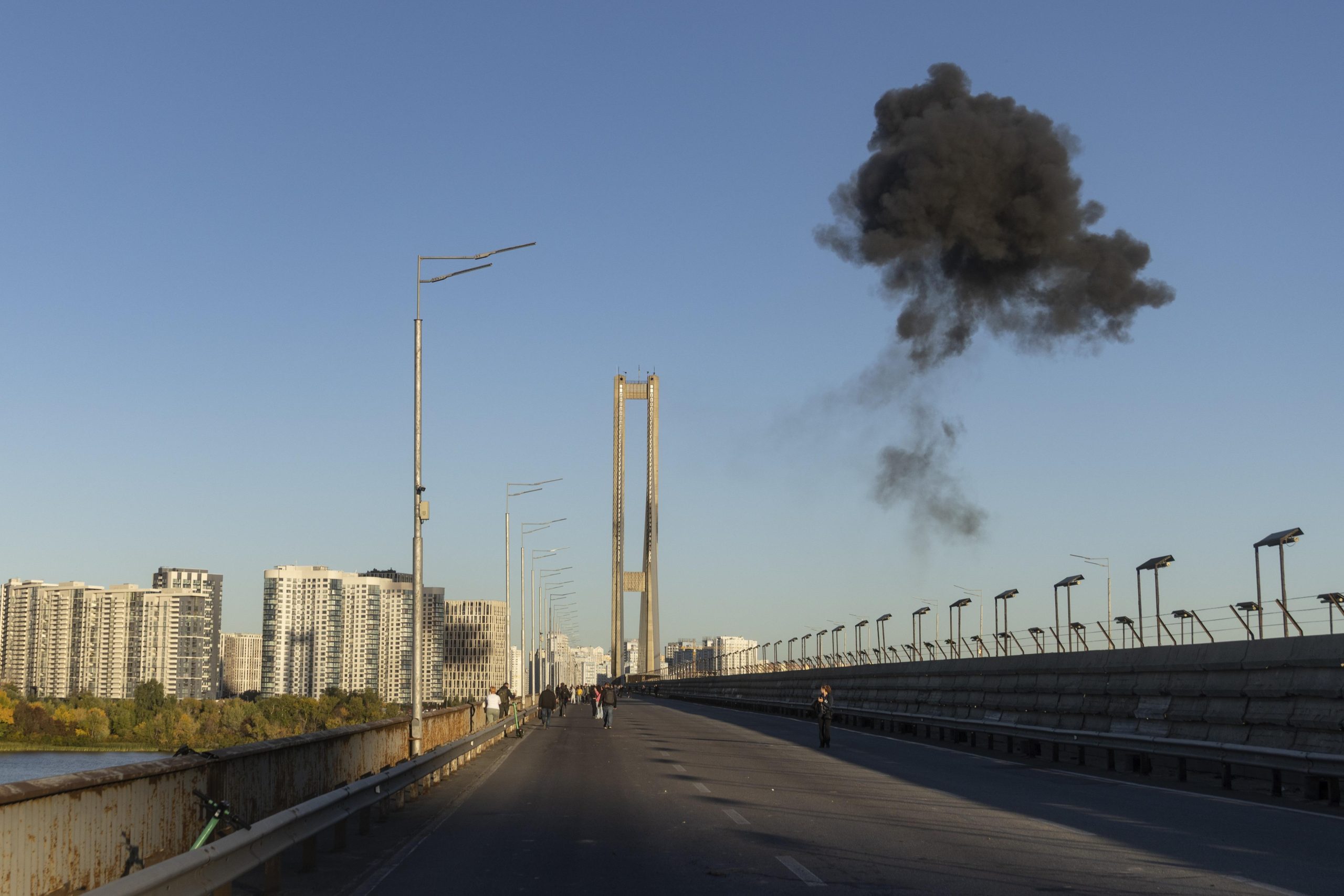
The repair work affected Kurenivka, Obolon, Osokorky and Pozniaky. Temporary hot water outages were expected while the damaged networks were being restored.
On the morning of 17 November, services on the green line of the Kyiv Metro were also disrupted. Trains stopped running between Osokorky and Chervonyi Khutir stations. Services on this section were later restored, although the route arrangements remained modified.
Other districts of the capital were also affected by the attacks. In the Desnianskyi district, falling debris caused a fire near a 16-storey residential building. Warehouse facilities caught fire in the Dniprovskyi district, while buildings were damaged in the Obolonskyi district.
According to Ukrainian emergency services, two people were killed and another was injured in the overnight attack on Kyiv. These figures refer to the consequences of the attack on the city as a whole, rather than to the Northern Bridge specifically.
Traffic on the Northern Bridge partially restored on the evening of 17 November
Despite the initial closure, authorities managed to organise limited traffic across the Northern Bridge by the evening of 17 November.
According to a statement published by Vitali Klitschko at 19:33, experts from the National Institute for Infrastructure Development authorised the partial resumption of traffic, taking the damage into account.
However, significant restrictions remained in place:
-
Public transport and special-purpose vehicles were permitted to cross in both directions.
-
Traffic was directed onto the outermost right-hand lanes, which were shifted closer to the pavements.
-
Private cars and transit lorries remained prohibited from using the bridge.
-
Specialists still needed to carry out a detailed instrumental inspection to assess the load-bearing capacity of the damaged structures.
To organise temporary access, sections of the safety barriers had to be removed, and part of the pavement was used for traffic.
These measures indicate that the bridge remained suitable for limited use, but restoring full operation would require further technical assessments and repair work.
What eyewitnesses reported and social media footage revealed
Videos showing explosions near the Northern Bridge appeared on social media. Their circulation was documented by journalists from Deutsche Welle and Estonia’s public broadcaster ERR, among others. The footage confirms that the area around the crossing came under attack, although it does not independently establish the exact number of impacts or the extent of internal structural damage.
Particular attention was drawn to footage published on 17 November showing pedestrians crossing the closed bridge. The images demonstrate how severely the suspension of road traffic affected ordinary residents.
An important detail is that some reports warned that official permission for pedestrians to cross the damaged structure had not been granted at that time. Therefore, the presence of people on the bridge did not mean that the crossing had been declared completely safe.
Meanwhile, rumours about the alleged complete destruction of the Northern Bridge or the disappearance of some of its load-bearing cables should be treated with caution. Individual images taken from certain angles are not sufficient evidence of structural collapse. Official reports confirm damage and the need for further inspections, but do not provide grounds for declaring the bridge destroyed.
Kyiv residents describe how their lives changed after the bridge closures
The consequences of the attacks were clearly illustrated in a report by Ukraine’s public broadcaster Suspilne, whose journalists spoke to passengers on the left bank on 17 November.
According to residents, journeys that previously took around 55 minutes could now take up to two and a half hours because of traffic congestion and transfers. Other passengers reported spending three to four hours travelling. Some had to arrange to work from home with their employers.
As an alternative, Kyiv residents used the city’s circular railway service, while some attempted to cross the bridges on foot or by electric scooter. Kyiv City Express organised additional services between Pochaina, Darnytsia and Vydubychi.
The damage to the Northern Bridge was therefore far more than an isolated episode of the war. Russian strikes on transport infrastructure directly affected public transport services, access to workplaces and the operation of the capital’s utility networks.
What photographs reveal about the damage to the Northern Bridge
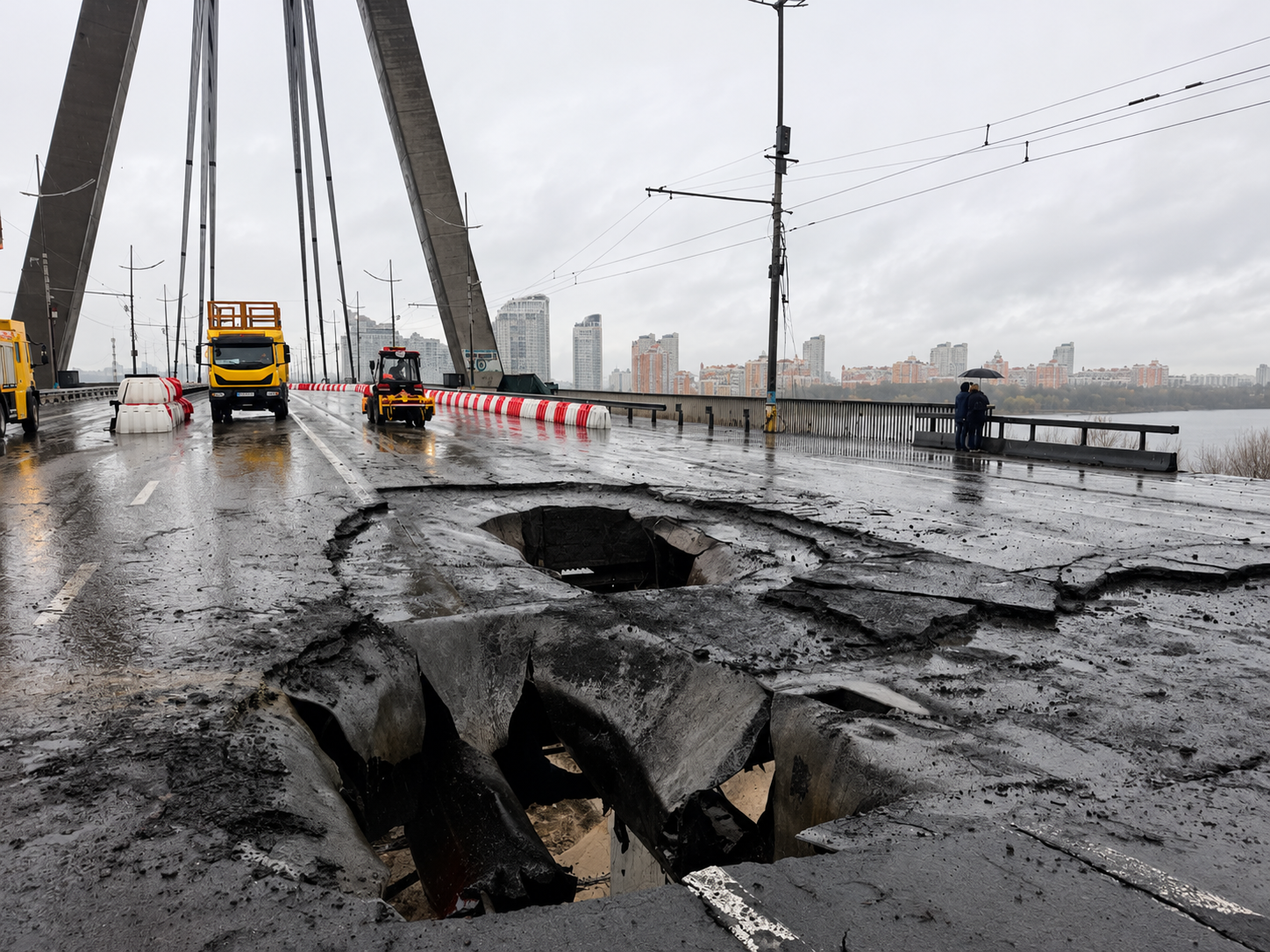
Photographs published on 17 November provide a clearer picture of the damage visible on the surface of the bridge.
Images circulated by Ukrainian media show a large hole in the road surface, destroyed sections of asphalt concrete and damage near the pedestrian area. Other photographs show deformed structural elements and municipal repair equipment at work.
Although these images reveal serious localised damage, final conclusions about the condition of the load-bearing structures must be made by specialists following a technical inspection.
Ukraine strikes back: Crimean Bridge partially collapses on 17 November
While Kyiv was dealing with the consequences of Russian missile attacks, events unfolded in the Kerch Strait that could have significant implications for Russian military logistics.
During the night of 16–17 November, Ukrainian Defence Forces once again attacked the Crimean Bridge, which connects Russian territory with the temporarily occupied Crimean Peninsula.
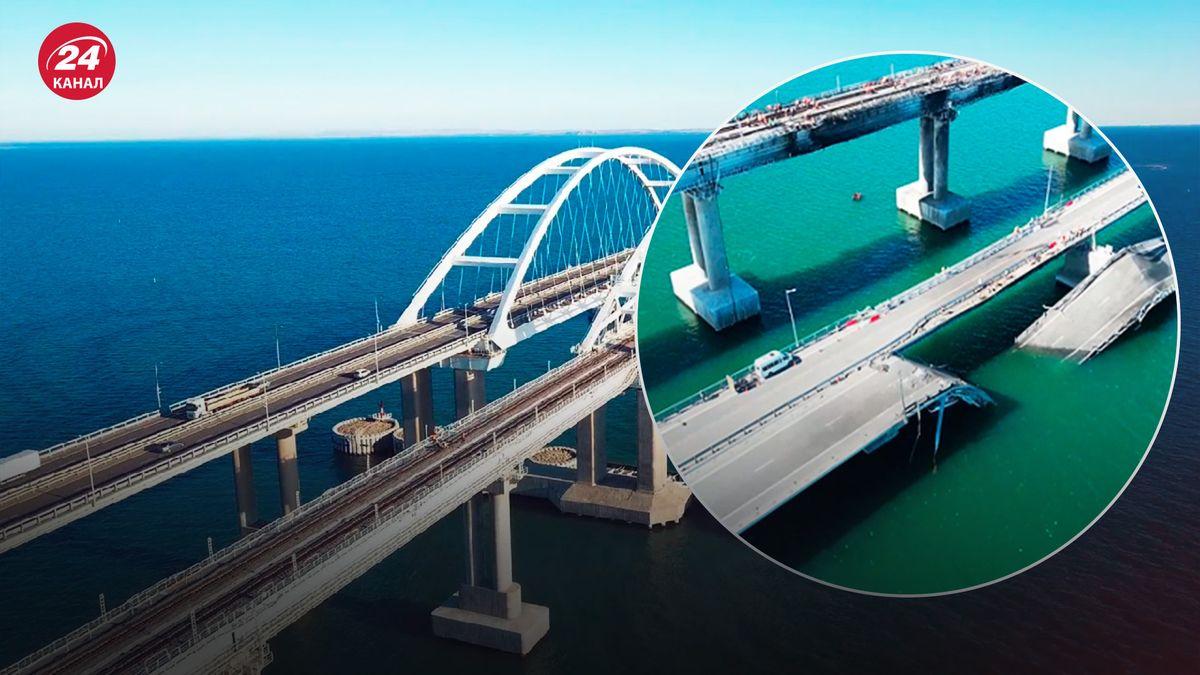
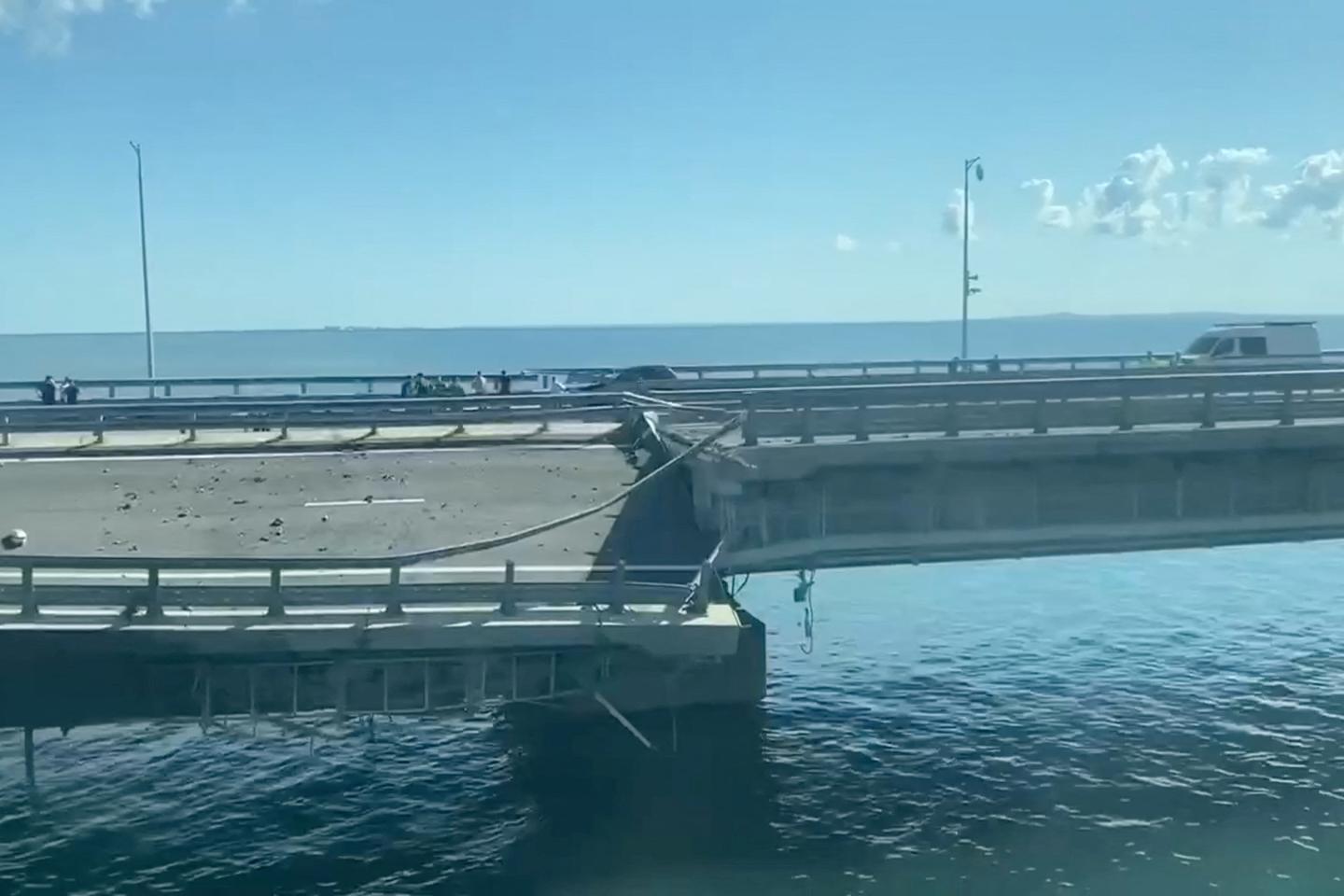
According to an official statement from the Security Service of Ukraine (SBU), the operation destroyed one of the bridge’s metal arches and the road span beneath it. Ukrainian officials also reported preliminary evidence of damage to the railway section of the crossing.
How the Ukrainian military operation unfolded
According to the SBU, the strike marked the final stage of a complex operation that had been in preparation for approximately a month. The Security Service of Ukraine, the General Staff and other units of the Ukrainian Defence Forces took part in the operation.
Ukrainian forces initially conducted operations against Russian air defence systems, radar installations and electronic warfare equipment. These were followed by strikes directly targeting the bridge.
The SBU reported that its Alpha special forces unit used Ukrainian Palianytsia missile-drones against the road section of the crossing. Other Ukrainian weapons systems were also used during the operation, including Ruta, FP-5 Flamingo and Neptune.
What is known about the destruction and suspension of traffic
On the morning of 17 November, Ukrainian and Russian Telegram channels began publishing photographs of the Crimean Bridge showing only one of its two distinctive metal arches.
Other images showed collapsed elements of the road section of the structure.
Russia’s Ministry of Transport confirmed another attack and officially announced the suspension of both road and railway traffic. Russia’s Investigative Committee also acknowledged structural damage to the bridge.
The fact that the attack took place and transport restrictions were imposed was therefore confirmed by both sides. The extent of the destruction was described in detail by Ukrainian military authorities and illustrated in materials they released. However, Reuters separately noted that it had not been able to immediately and independently verify the authenticity of all the video footage circulating online.
Why the strike on the Crimean Bridge matters militarily
The Crimean Bridge has long been one of the main supply routes for Russian forces stationed on the occupied peninsula. Military supplies, fuel, equipment and personnel have been transported across its road and railway sections.
The destruction of a road span and disruption of railway services could complicate supplies to Russian troops and increase their dependence on alternative routes.
However, the actual impact of the strike on military logistics will depend on how long the crossing remains closed, the condition of the railway structures and Russia’s ability to redirect transport flows.
According to the SBU, the November 2026 attack was the Ukrainian security service’s fourth successful operation against the Crimean Bridge, following strikes in October 2022, July 2023 and June 2025.
Two attacks on bridges in a single night
The events of 17 November demonstrated how important strikes against transport infrastructure have become in the Russia–Ukraine war.
Russia launched seven ballistic missile strikes against two bridges in Kyiv, causing damage and disrupting transport and public utilities. Ukraine, in turn, carried out a planned military operation against the Crimean Bridge, which Russian forces use to supply their military units in occupied territories.
Ukrainian President Volodymyr Zelenskyy described the operation against the Crimean Bridge as a response to Russian strikes on Ukrainian cities and infrastructure. Meanwhile, Kyiv faced the urgent task of restoring vital urban infrastructure. At the time this article was prepared, reliable estimates for the full repair of both Kyiv bridges were not yet available.
Article source: warecho.org