

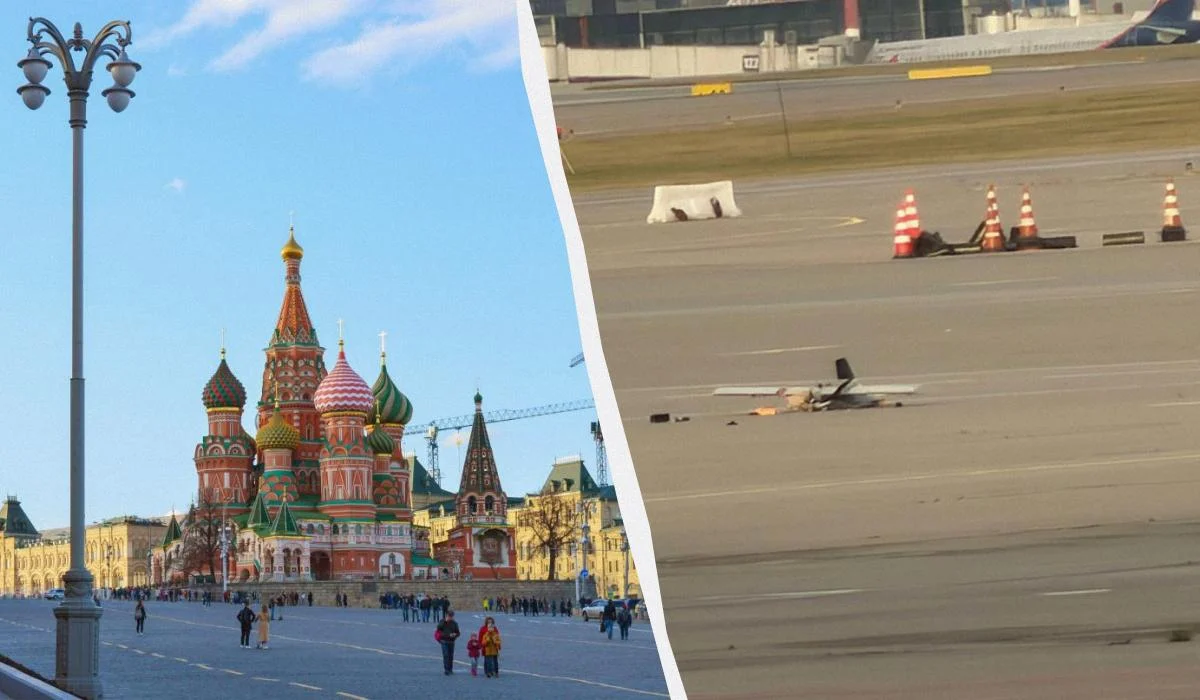
On 23 October 2026, Moscow faced another large-scale Ukrainian drone attack, causing serious disruption at the capital’s airports and prompting the evacuation of people from high-rise office buildings.
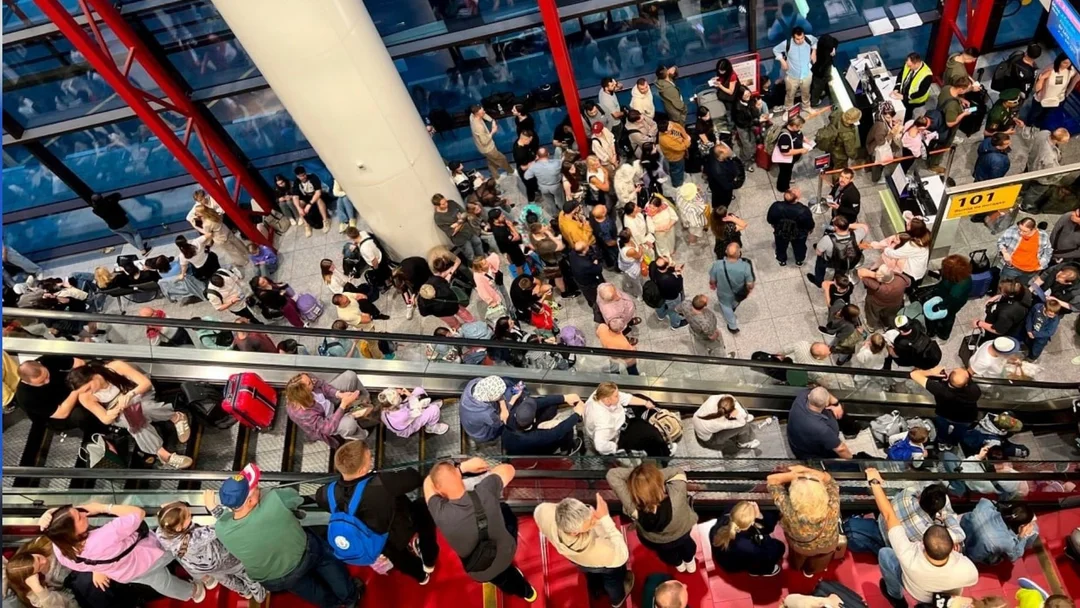
Airspace was temporarily closed to civilian aircraft, dozens of planes were forced to change their routes, and passengers at Sheremetyevo, Moscow’s largest airport, were directed to shelters. At the same time, reports emerged of people being evacuated from the Moscow City skyscraper complex. Air raid sirens sounded at all the airports, with visitors instructed to move away from windows and take shelter in toilets. Of course, this country has not provided enough proper shelters for all the passengers at its capital’s airports. ))
Drone attack brings air traffic to a halt
On the afternoon of 23 October, the Moscow region once again faced the threat of a large-scale drone attack. Amid reports of air defence activity, Russian aviation authorities began imposing restrictions on civilian flights.
As a result, all four airports serving the Russian capital — Sheremetyevo, Domodedovo, Vnukovo and Zhukovsky — temporarily suspended arrivals and departures.
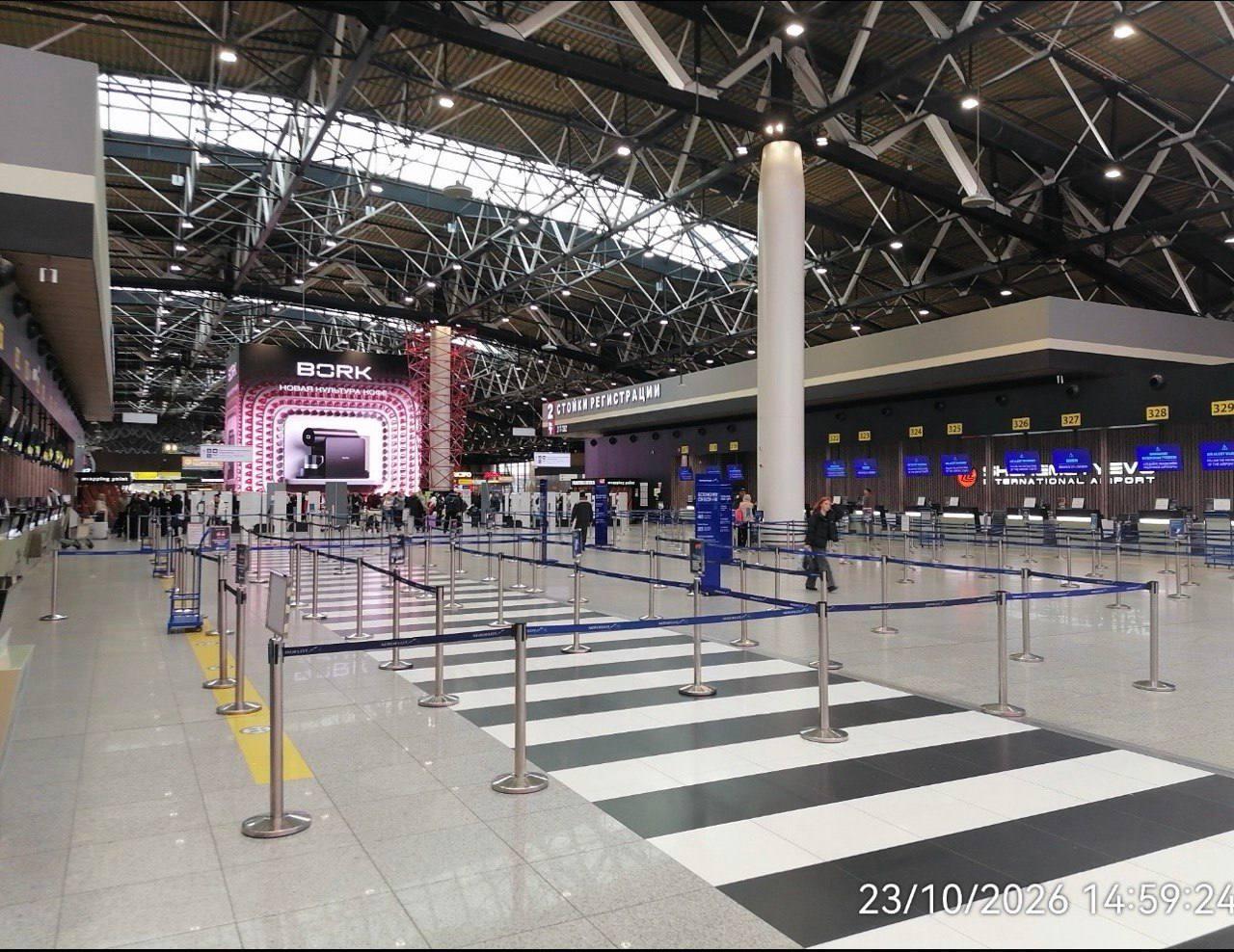
Photographs taken inside Sheremetyevo’s terminals on the afternoon of 23 October 2026 were published. The images show deserted check-in counters, security screening areas and waiting halls following the evacuation of passengers.
Screens above the seats display air raid warnings and instructions to follow airport staff directions. Other photographs show passengers carrying their belongings as they make their way in an orderly manner towards safe areas and shelters.
According to the Ukrainian news outlet RBC-Ukraine, the first official statements about intercepted drones appeared at approximately 13:38 Moscow time. Moscow Mayor Sergei Sobyanin reported that four drones heading towards the city had been destroyed.
Further reports of air defence activity followed over the next hour. In particular, Russian authorities claimed to have intercepted several additional groups of drones.
According to the published information, between 13:38 and 14:36 alone, the Russian side reported destroying 11 drones. The scale of the restrictions demonstrated the serious impact of the aerial threat on the Russian capital’s transport infrastructure.
Hundreds of flights delayed or cancelled
The most noticeable consequences of the attack affected civilian aviation. The simultaneous suspension of aircraft operations at four airports disrupted the normal schedule of the Moscow aviation hub, one of Russia’s largest transport centres.
According to the Ukrainian news outlet Inshe TV, which published its report at approximately 16:30, the number of delayed and cancelled flights had reached an estimated 340 by that time. The disruption affected more than just passengers waiting to depart from Moscow.
Aircraft already flying towards the Russian capital were unable to land at their originally scheduled airports. Some remained airborne while awaiting landing clearance, while others were diverted to alternative airports. Saint Petersburg was among the destinations used.
According to Inshe TV, Pulkovo Airport was receiving passenger aircraft originally bound for Moscow. Reports indicated that 25 flights had been diverted there.
Monitoring channels also published information about aircraft that remained airborne while awaiting further instructions. These reportedly included international flights from Antalya and Dubai.
Among the aircraft unable to land in Moscow was an Emirates Airbus A380, the world’s largest passenger airliner, operating a flight from Dubai to Domodedovo. According to eRadar, the aircraft was circling over the Penza region while awaiting permission to land or instructions to divert.
Such situations create additional difficulties for airlines. Changing a route requires recalculating fuel reserves and planning the remainder of the flight, while using alternative airports disrupts crew schedules. Even after restrictions are lifted, aircraft cannot always immediately return to their original timetables.
As a result, the consequences of several hours of closed airspace can last considerably longer than the air raid alert itself.
Passengers directed to shelters at Sheremetyevo
The situation was particularly tense at Sheremetyevo International Airport. Greek news outlet SKAI reported on evacuation measures carried out on 23 October.
According to the outlet, the management of Moscow’s largest airport urged passengers to move to safe areas because of the threat of a drone attack. Parts of the terminals were cleared, and people were advised to remain in designated protected areas.
The aerial threat therefore affected not only airport operations but also passengers inside the terminals. Airport staff had to ensure the safety of people waiting for flights while also preparing to resume aviation operations once the restrictions were lifted.
The Greek outlet also reported that flights had been suspended at three Moscow airports at one stage of the incident. Ukrainian sources, meanwhile, reported the closure of all four airports. This discrepancy may be explained by the gradual introduction of restrictions and differences in publication times.
People evacuated from a high-rise building in Moscow City
The air raid alert also affected the Russian capital’s business district.
Amid the Ukrainian drone attack, reports emerged of people being evacuated from the Moscow City complex, which houses offices belonging to major companies, financial institutions and federal government agencies.
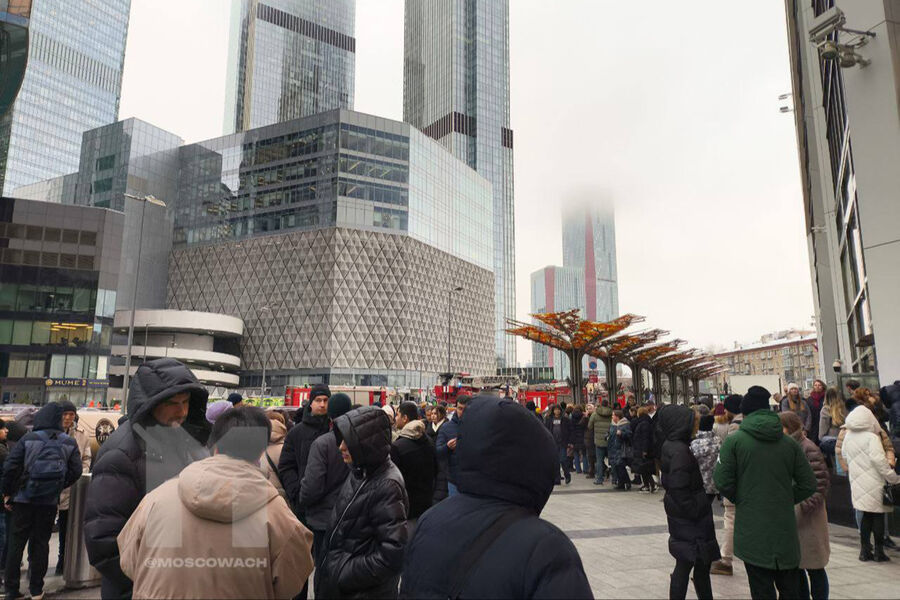
Ukrainian news outlet Inshe TV reported that evacuation measures were taking place at the IQ Quarter high-rise complex. Published reports mentioned people being escorted out of the building following warnings about the drone threat.
The complex is particularly important to Russia’s federal administration. It houses departments of several federal agencies, including the Ministry of Economic Development, the Ministry of Industry and Trade, the Ministry of Digital Development and Rosstandart.
The evacuation of such a building during a large-scale drone attack demonstrates that an aerial threat can disrupt not only transport services but also government institutions. However, reports of an evacuation do not, in themselves, mean that a drone struck the building.
At the time of publication, there was no independently confirmed information that the skyscraper had been damaged in the attack. The immediate cause of the alarm being triggered had also not been established. Moscow’s Ministry of Emergency Situations stated that it had been a “false activation” of the fire alarm. But whether this explanation can be believed is now difficult to say, given that Russian media and television have not told the truth once since the beginning of the full-scale war.
Therefore, the information documented by Ukrainian sources primarily concerns the evacuation of the IQ Quarter rather than the entire Moscow City complex.
Reports of drone debris at Sheremetyevo Airport
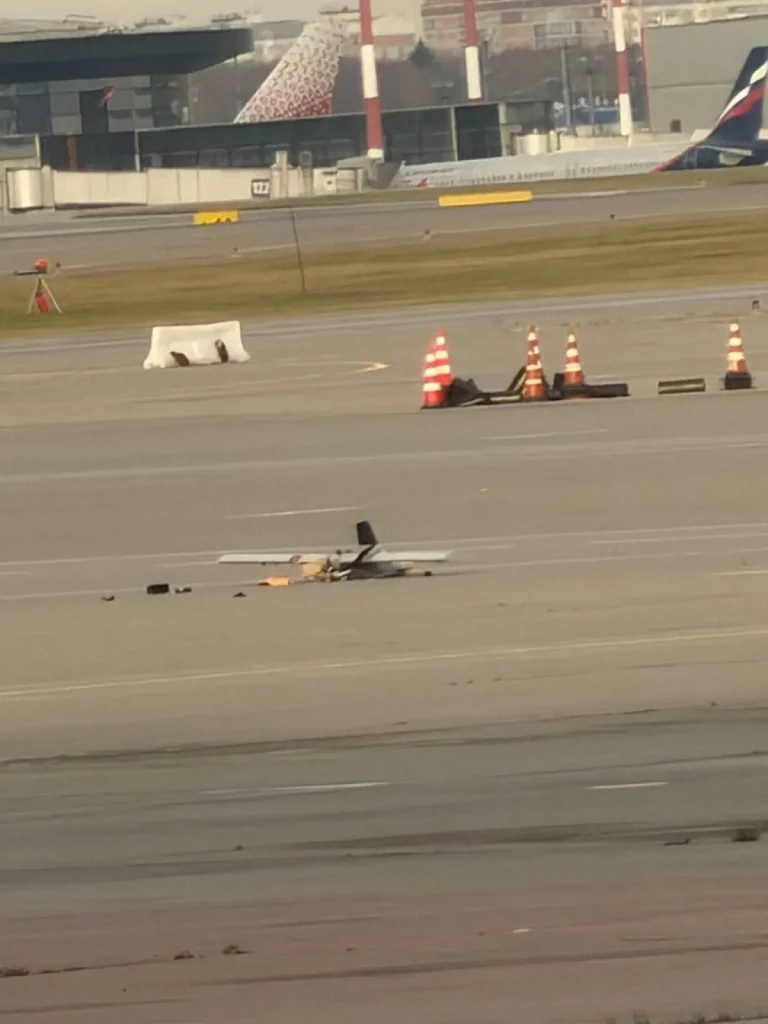
Alongside reports of airport closures, information circulated about fragments of a Ukrainian drone falling to the ground. In particular, Ukrainian news outlet Inshe TV reported that UAV debris had been discovered in the Sheremetyevo area. However, the available materials do not make it possible to independently establish the origin of these fragments or their exact location.
Ukrainian forces also used an unusual method of delivering drones, involving balloons and specialised carriers.
Moscow faces increasingly frequent and prolonged flight restrictions
The 23 October attack was the latest in a series of aerial incidents that have repeatedly disrupted operations at Moscow’s airports in recent weeks.
On 16 October, international news channel Euronews reported on a previous major Ukrainian drone attack that had also forced all four of the capital’s airports to temporarily suspend flight operations. According to Euronews, some restrictions remained in place for up to seven hours, while more than 160 flights were cancelled.
The outlet also highlighted a sharp increase in the total duration of airport closures in Moscow.
According to statistics cited by Euronews, Moscow’s four airports were subject to restrictions for a combined total of 101 hours during the first two weeks of October. By comparison, the figure for the whole of September was 46 hours.
Repeated flight suspensions create a chain reaction: schedules are disrupted, aircraft end up at airports other than those from which they are supposed to operate their next flights, and passengers are forced to wait for departures or look for alternative routes.
Uncertainty creates an additional problem. Airlines cannot accurately predict how long restrictions will remain in place, as decisions to resume flights depend on the current situation in the airspace.
Why drones pose a serious threat to civilian aviation in Russia
The threat posed by drones creates risks for passenger aircraft regardless of whether a particular airport is the intended target of an attack.
The danger involves not only the possibility of an aircraft colliding with a drone, but also air defence operations, falling debris and the limited ability to assess conditions in the airspace quickly.
In September 2026, Ukrainian President Volodymyr Zelenskyy warned international airlines and insurance organisations about the dangers of using Russian airspace. He emphasised that Ukraine did not regard civilian aviation as a target for its attacks.
A Reuters report also cited an assessment by Osprey Flight Solutions, a company specialising in aviation security. Its experts warned that drone strikes deep inside Russian territory, including areas around Moscow and Saint Petersburg, were highly likely to continue throughout 2026. They paid particular attention to the risk of errors in identifying airborne targets during an armed conflict.
Therefore, airport closures in Russia amid the threat of Ukrainian drones are not merely a transport problem but also a necessary measure to reduce risks to civilian aircraft and their passengers.
Consequences of the 23 October attack on Moscow
The events of 23 October once again demonstrated the vulnerability of Moscow’s transport infrastructure to prolonged aerial threats.
The most obvious consequence was the temporary suspension of operations at all four airports in the capital region, accompanied by widespread flight delays and cancellations.
In addition to aviation restrictions, there were reports of passengers being evacuated from Sheremetyevo and employees being evacuated from the IQ high-rise complex in Moscow City. However, the full scale of the attack remains unknown.
Figures concerning the number of drones destroyed are based primarily on statements by Russian officials and have not been independently verified. Reports of direct strikes on airports or damage to skyscrapers also require further verification.
Nevertheless, regardless of the final results of air defence operations, the consequences of the aerial threat for civilian infrastructure are already clear: Russia’s largest aviation hub once again faced major restrictions, while safety measures required evacuation procedures.
As the war continues and drone attacks intensify, such disruptions may remain a serious problem for Moscow’s airports and airlines operating flights through Russian airspace.
War always comes back to where it came from!
Source: warecho.org