

In occupied Crimea, the occupation authorities have begun installing public landline telephones to provide free access to emergency services.
Municipal administrations are relying on push-button phones as a backup in case communications are cut off, as the mobile network on the peninsula is already operating according to a schedule. The first such telephone appeared in annexed Yevpatoria, on Theatre Square in the city centre. Similar devices have also begun to be installed in annexed Dzhankoi, so far at five locations.
The installation of the phones was reported by the ASTRA Telegram channel. The report says that the telecoms operator Miranda installed a free landline telephone in Yevpatoria specifically so that residents and visitors could contact emergency services in any situation.
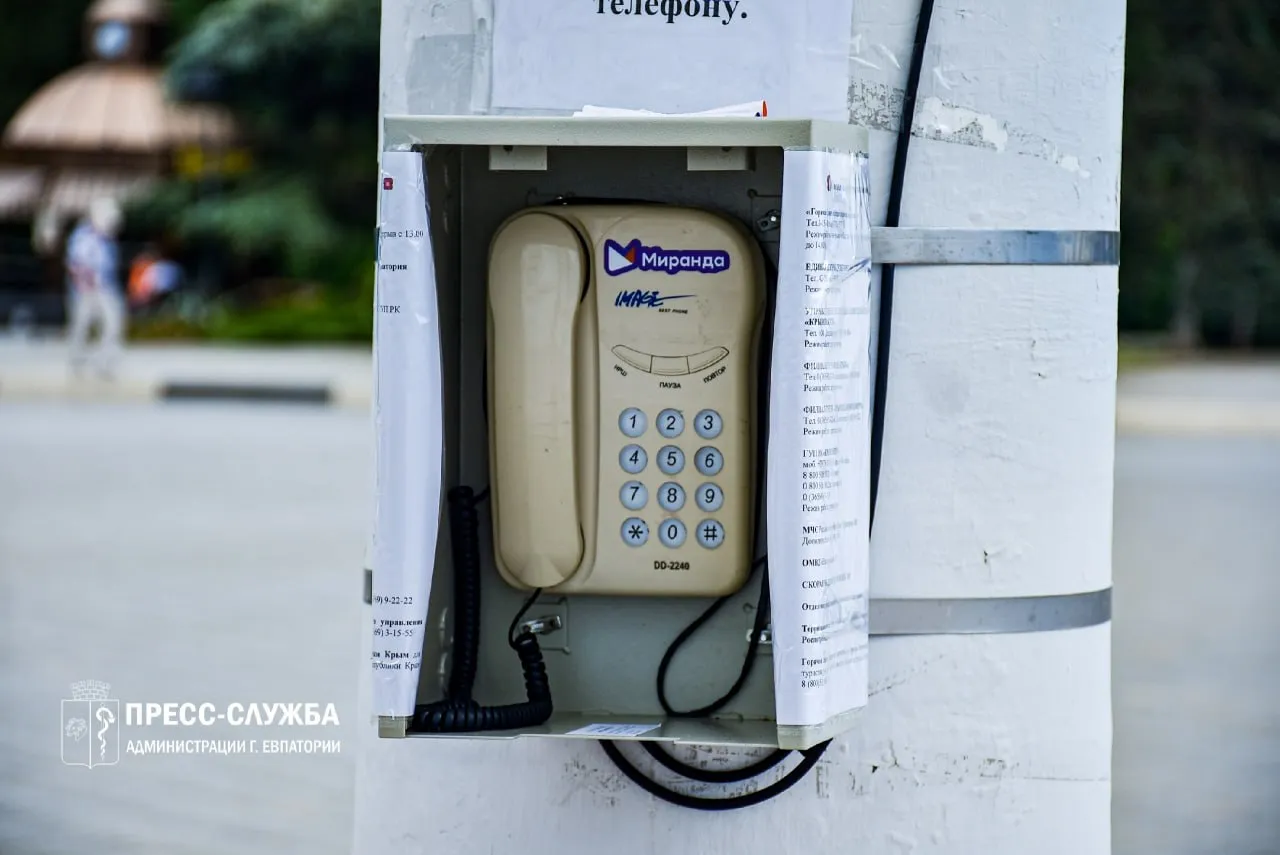
“The availability of a landline telephone is especially important in the event of disruptions to mobile communications,” the city administration said.
In Dzhankoi, the same phones have appeared at several locations, although the occupation administration has not yet provided a detailed list of their exact addresses.
Crimea’s communications network is experiencing increasingly frequent failures
The installation of emergency telephones indicates that mobile service disruptions on the peninsula have become a regular occurrence rather than isolated incidents. The occupation authorities are effectively acknowledging that residents can no longer rely solely on mobile networks.
Such measures usually accompany other restrictions affecting residents of the annexed territory, ranging from communications to financial transactions and everyday services, which continue to become more severe.
Crimea is facing growing infrastructure restrictions
Informator previously reported that cash withdrawals from ATMs in occupied Crimea had been sharply restricted. The largest ATM network on the peninsula belongs to VTB Bank, which introduced strict withdrawal limits. Crimean residents are also being required to register for military service in order to receive compensation for the lack of electricity and water. In this way, the occupation authorities are linking basic household compensation to mobilisation procedures.
Source: informator.ua