

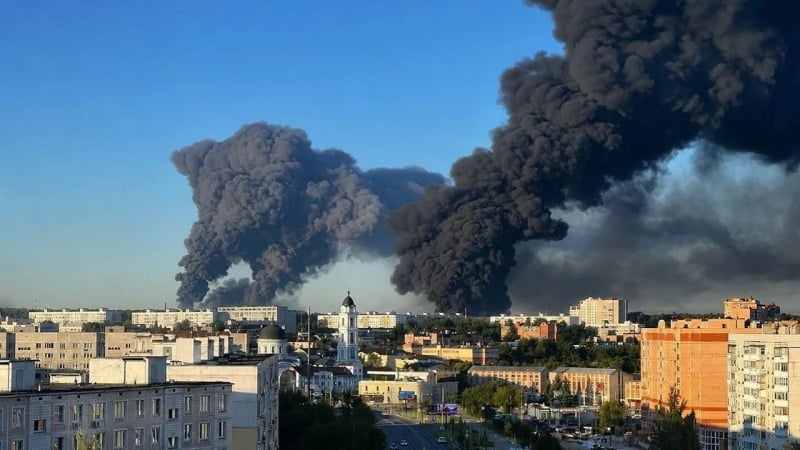
Following Ukrainian drone attacks on Wildberries logistics centres in Noginsk, Kotovsk and Podolsk, the Russian e-commerce market is facing new risks.
What consequences could sellers, employees and customers face?
A series of Ukrainian drone attacks on Wildberries logistics centres in Noginsk, Kotovsk and Podolsk could pose a serious challenge to the Russian e-commerce market. This is not only about the operations of one of Russia’s largest online marketplaces: the consequences could affect millions of sellers, warehouse employees, entrepreneurs and customers.
Pyotr Chernyshov, the former president of Kyivstar, commented on the potential impact of the attacks on Wildberries infrastructure.

Drones attacked several Wildberries warehouses
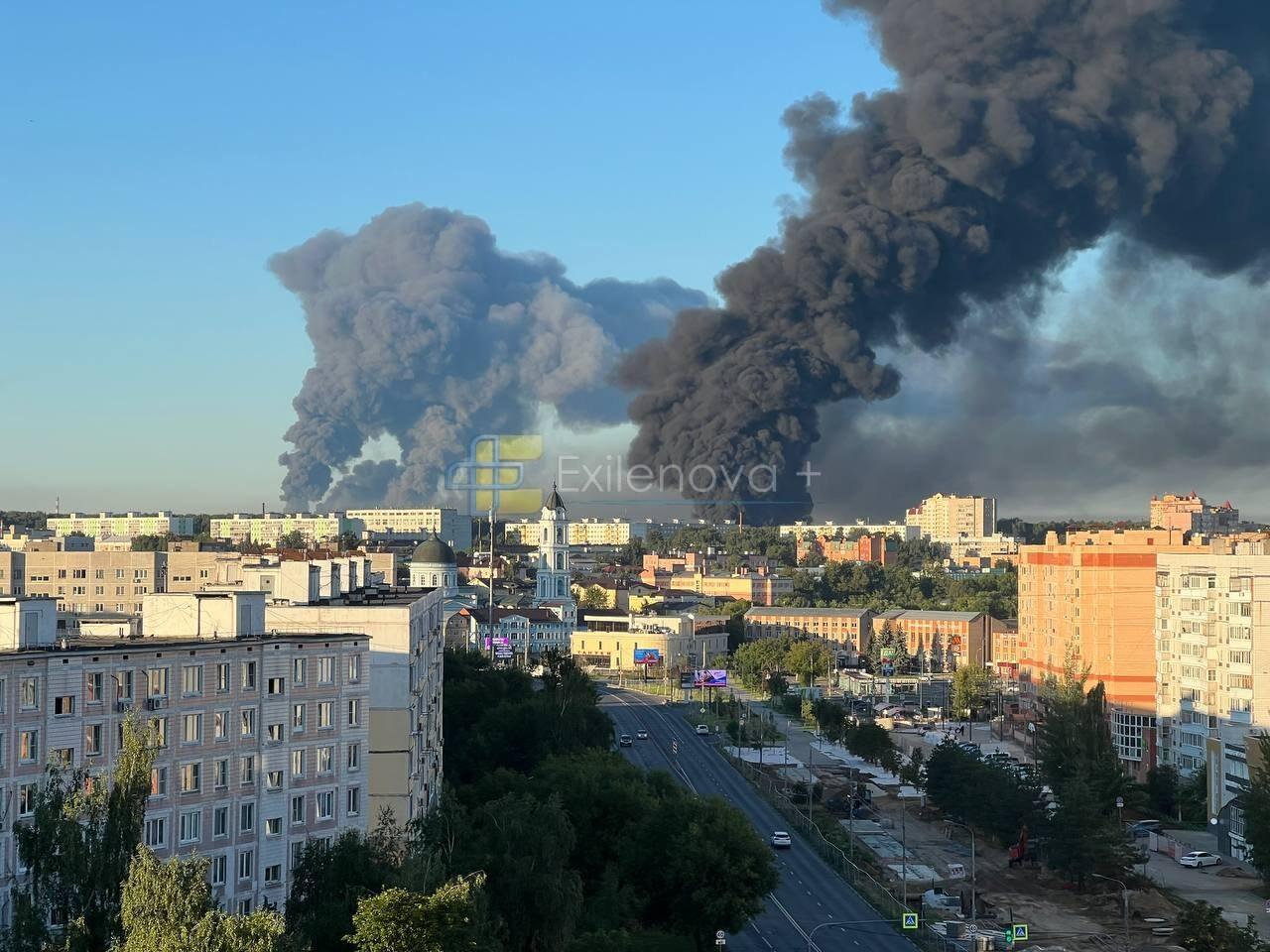
On the night of July 18, two Wildberries logistics facilities were attacked. The centres targeted were located in Noginsk in the Moscow region and Kotovsk in the Tambov region.
Judging by the published video footage, major fires broke out at the facilities. The scale of the blazes was comparable to fires at medium-sized oil refineries.
Two days later, on July 20, drones attacked another Wildberries logistics centre in Podolsk in the Moscow region. A large fire also broke out after the attack.
This is therefore no longer an isolated incident, but a series of consecutive attacks on the logistics infrastructure of one of Russia’s leading online marketplaces.
The role of Wildberries warehouses in the Russian economy
Russia’s e-commerce model differs from Ukraine’s. In Ukraine, for example, the online retailer Rozetka sells goods, while Nova Poshta handles their delivery. In Russia, Wildberries and Ozon combine both functions, acting as online marketplaces and logistics operators at the same time.
Marketplace services are used not only by ordinary customers. Small businesses in different regions also use Wildberries and Ozon to obtain finished products, components and raw materials for their operations.
It would therefore be a mistake to view the targeted facilities simply as warehouses filled with inexpensive Chinese-made goods. The logistics networks of Russia’s largest marketplaces have become an important part of the country’s economy.
Wildberries and Ozon together account for approximately 77–80% of all online orders in Russia. The total value of the Russian e-commerce market was estimated at around 13 trillion roubles in 2025, equivalent to approximately $167 billion.
More than 1.2 million sellers operate across the two platforms. This means the marketplaces are not simply large online hypermarkets, but a fully developed infrastructure on which a significant share of small businesses depends.
Both companies also appear in the RBC 500 ranking of Russia’s largest companies. Wildberries ranks 24th, while Ozon is in 41st place.
Online retail already accounts for approximately 14% of Russia’s total retail market, and its share continues to grow. The more heavily the market depends on e-commerce, the more significant the consequences of disruptions at warehouses and logistics centres may become.
Drone attacks on Russia’s logistics infrastructure as a reciprocal response
Russia has been carrying out missile attacks on Nova Poshta terminals for an extended period. At least eight such facilities have been destroyed.
According to Pyotr Chernyshov, drone attacks on Wildberries logistics centres, and potentially Ozon facilities, could be viewed as a reciprocal response to Russian attacks on Ukraine’s civilian logistics infrastructure.
Until recently, major facilities belonging to Russian online marketplaces had rarely been targeted. The situation has now changed, and the logistics sector is facing risks that could affect the entire e-commerce system.
Potential consequences of attacks on Wildberries warehouses
Vulnerability of logistics centres
Such terminals in Russia generally lack substantial air-defence protection. As a result, they may remain vulnerable to further drone attacks.
Risks for sellers and small businesses
The logistics infrastructure of Wildberries and Ozon serves not only customers, but also more than 1.2 million sellers. Any disruption to warehouse operations could result in delivery delays, lost goods and interruptions to commercial activity.
Following such incidents, entrepreneurs may begin changing how they store goods. Instead of sending large consignments, they may deliver smaller quantities to warehouses, reduce storage periods and distribute stock across different facilities to avoid concentrating all their products in one location.
The consequences could be particularly severe for businesses that effectively used marketplace logistics centres as their main warehouses for online sales.
Threat to warehouse employees
Reports concerning the attack in Kotovsk suggested that seven people had been killed. Against this background, employees at logistics facilities may seriously reconsider the safety of their work, particularly during night shifts.
If warehouse logistics depend on relatively low-paid labour while facilities lack adequate protection, employers could face staff shortages. For workers, the question will be whether a modest salary justifies the potential risk.
Changes in customer behaviour
Ordinary customers accustomed to receiving goods the day after placing an order may also feel the effects of the attacks. Damage to warehouses, the redistribution of stock and changes to delivery routes could lead to delays and reduced availability of certain products.
Why the consequences will extend beyond Wildberries
Russian authorities may view damage to logistics terminals as a limited problem affecting a private company. For sellers, employees and customers, however, the importance of these facilities is considerably greater.
Entrepreneurs risk losing goods and established supply channels. Employees are being forced to consider threats to their own safety. Customers may face longer delivery times and disruptions to product availability.
The series of attacks on Wildberries warehouses demonstrates how dependent the Russian market has become on a small number of major digital platforms. One of the key questions now is how quickly sellers, workers and consumers will change their behaviour in response to the new risks facing Russia’s logistics infrastructure.
Source: warecho.org